Moving to Texas: A Starter Guide for 2026
United States Real Estate August 27, 2026
United States Real Estate August 27, 2026
No state income tax, a business-friendly economy, and a genuine cultural identity that ranges from cosmopolitan to cowboy — Texas has spent the past several years as one of the top relocation destinations in the country, and 2026 gives buyers a rare opening: prices across the state's major metros have cooled from their pandemic-era peaks, handing real negotiating power back to buyers for the first time in nearly a decade.
Each major Texas metro has its own personality. Dallas-Fort Worth offers corporate headquarters and suburban scale. Houston brings energy-sector stability and remarkable diversity. San Antonio offers the most affordable entry point among the majors. And then there's Austin — the metro that captured the nation's attention during the pandemic boom, and one where we have direct, on-the-ground presence today.
Texas overall is firmly a buyer's market in 2026. Inventory is abundant across all four major metros, price cuts are common, and homes are sitting longer than they have in years — not a sign of trouble, but a correction after an unusually hot run. The underlying fundamentals haven't changed: population growth continues, businesses keep relocating from higher-cost states, and diversified employment bases across tech, energy, healthcare, and finance support long-term demand.
One statewide caution worth flagging early: Texas has seen some of the steepest homeowner insurance increases in the country due to storm exposure, and property tax rates are structurally high to offset the lack of income tax. The "no income tax" headline is real, but total cost of ownership deserves a full look before assuming Texas is automatically cheaper than where you're moving from.
Austin deserves its own spotlight, and not just because of our local presence — it's genuinely one of the more interesting relocation stories in the country right now.
The correction is over, and that's good news for buyers.
Between 2020 and 2022, Austin prices rose more than 40%, fueled by a wave of relocation buyers from San Francisco, New York, and Chicago. That frenzy has passed. The Austin metro median sits around $440,000 in 2026, while the city of Austin proper runs closer to $595,000 — a roughly $155,000 gap driven by years of suburban buildout in places like Pflugerville, Round Rock, and Kyle. Inventory sits around 4-5 months of supply, giving buyers real room to negotiate closing costs, rate buydowns, and repair credits.
The suburbs are where the action is.
Williamson County, just north of Austin, has outpaced the city itself for several consecutive years, with Georgetown, Round Rock, Cedar Park, and Leander leading the way. Georgetown's Wolf Ranch community has become one of the most popular landing spots for relocating buyers, helped by property tax rates lower than Travis County in most cases.
The jobs are still coming.
Tesla, Apple, Oracle, Samsung, Meta, Google, and Indeed have all expanded operations in the Austin area, and that structural employment base is what continues to support the market even as pandemic-era migration has cooled.
One thing to watch:
if you're buying new construction in the suburbs, check whether the property sits in a Municipal Utility District (MUD) — these can add a meaningful surcharge on top of your regular property tax rate, and it's worth asking builders for the full combined rate before making an offer.
You can't fully understand a place from a spreadsheet, so here's a taste of what makes Austin worth falling for:
Barton Springs Pool
A spring-fed, 68-degree natural pool in the middle of the city, and a genuine Austin institution year-round.
The Texas State Capitol
Grounds worth a walk even if you have zero interest in politics; the building is taller than the U.S. Capitol and the surrounding lawn is a favorite spot for locals.
Lady Bird Lake Hike-and-Bike Trail
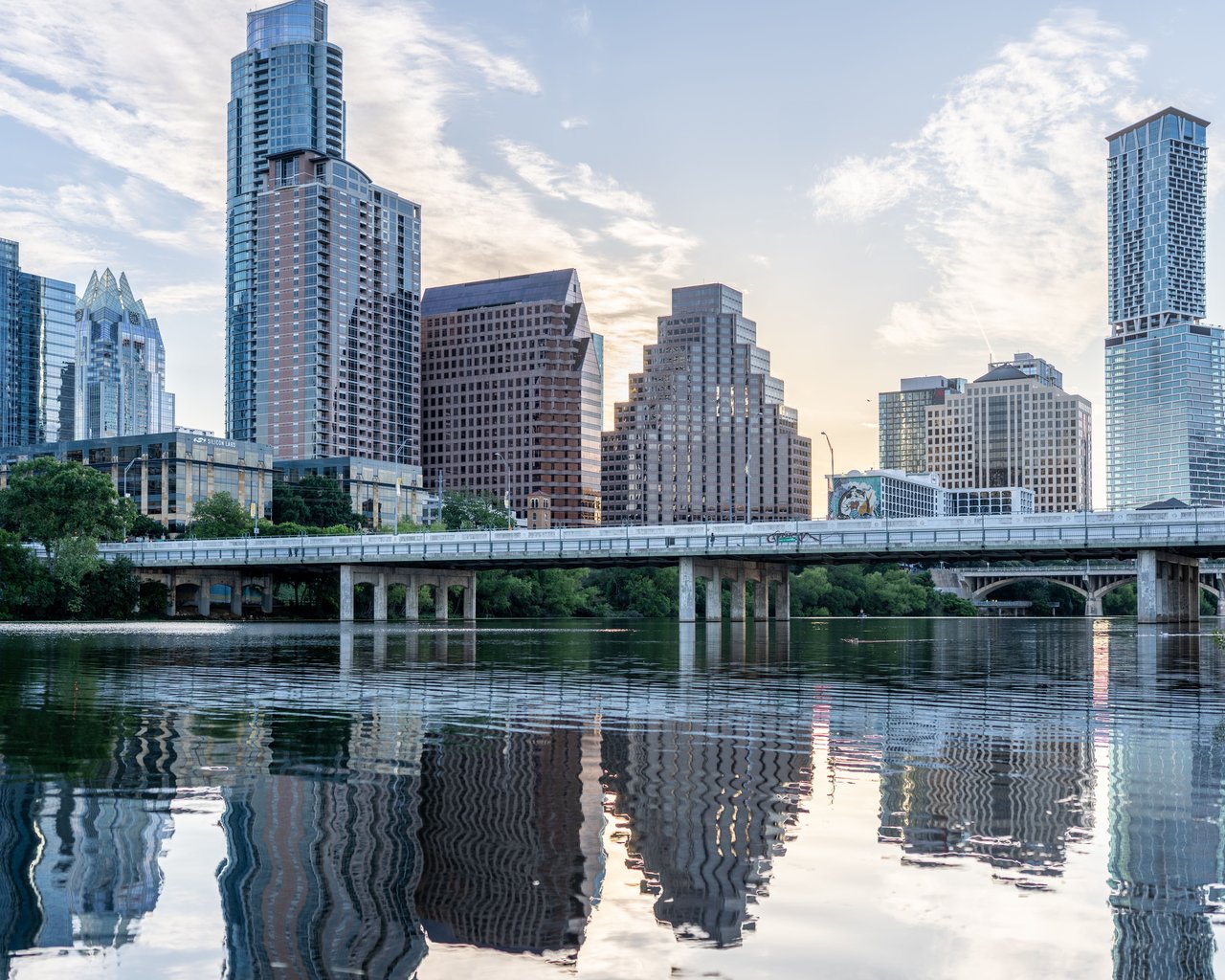
A 10-mile loop through the heart of the city, popular for everything from morning runs to sunset walks with a view of the skyline.
South Congress Avenue (SoCo)
Austin's most walkable strip of boutiques, murals, and the iconic "I love you so much" wall, plus a straight shot view of the Capitol.
Austin's food scene is one of the fastest ways to actually feel like a local, not a visitor.
Texas brisket barbecue
The genuine article, smoked low and slow; expect to wait in line at the city's most well-regarded spots, and consider it part of the experience.
Breakfast tacos
A proper Austin morning ritual, found everywhere from gas stations to sit-down spots, with everyone having a strong opinion on the best one.
Tex-Mex
Distinct from Mexican food and a category unto itself in Texas; queso is practically a food group here.
Kolaches
A Czech-Texan pastry (savory or sweet) that reflects the state's often-overlooked Central European immigrant history.
@traveltex (Travel Texas) — the state's official tourism account, with roughly 261K followers, covering everything from Big Bend to the coast— the safest statewide anchor tag.
@visitaustintx (Visit Austin TX) — Austin's official tourism account, around 186K followers, sharing the best of the city with the #TrueAustin hashtag — the go-to anchor for anything Austin-specific.
@atxvisitorcenter — Austin's official visitor center account, tagged directly by Visit Austin TX itself, useful for practical/visitor-focused content.
@musicaustin — tagged by Visit Austin TX as its official music-scene account, a strong fit if you ever tie a post to Austin's live music identity.
Villa Serena | A Private Listing on Lake Austin
Assuming "no income tax" means low overall cost.
Property taxes and homeowner insurance in Texas are among the highest in the country, and total carrying costs should be compared directly against your current state, not assumed to be automatically lower.
Overlooking the Austin metro-vs-city price gap.
Buyers focused only on "Austin" often miss that the surrounding suburbs, particularly Williamson County, may offer better value, lower property tax rates, and just as strong an outlook.
Skipping the MUD tax check on new construction.
Many new-build communities in Austin's suburbs sit within Municipal Utility Districts that add a separate tax layer — always ask for the full combined rate before making an offer.
Rushing the inspection period.
Texas allows for shorter option/inspection periods than some states, but a thorough inspection is still worth insisting on, especially on older homes.
This is exactly where local presence matters. Because Global Search Executive Real Estate Advisory has direct experience in the Austin market, we can connect you with Sotheby's affiliated advisors who understand not just the citywide numbers, but the specific dynamics of individual neighborhoods and suburbs — from the western corridor's luxury recovery to Williamson County's suburban growth story.
Is Austin still a good place to buy a home in 2026?
Yes, most analysts view 2026 as one of the more attractive entry points into the Austin market in recent years. Prices have stabilized after the 2022 peak and subsequent correction, inventory has rebuilt to buyer-favorable levels, and long-term fundamentals like tech-sector job growth remain intact.
Does Texas really have no state income tax?
Yes, Texas has no state personal income tax, which is a major driver of relocation from higher-tax states like California and New York. However, Texas offsets this with comparatively high property tax rates and elevated homeowner insurance costs, so total cost of ownership should be evaluated carefully.
What's the difference between Austin proper and the Austin metro area?
Austin proper carries a notably higher median home price, around $595,000 in 2026, compared to roughly $440,000 across the broader metro area, a gap largely explained by more affordable suburban growth in communities like Pflugerville, Round Rock, and Kyle.
Which Austin-area suburb is most popular with relocating buyers?
Georgetown, particularly the Wolf Ranch community in Williamson County, has become one of the most popular destinations for relocating buyers, helped by strong new-home inventory and property tax rates generally lower than Travis County.
Is Austin more expensive than Dallas or Houston?
Yes, Austin generally commands a higher price per square foot than Dallas or Houston, largely due to its smaller geographic footprint, tech-driven economy, and quality-of-life factors, while Dallas and Houston tend to offer more affordable entry points and broader job diversity.
Stay up to date on the latest real estate trends.


International Real Estate

and Why the Right Agent Still Matters

International Real Estate

International Real Estate

United States Real Estate

United States Real Estate
Inside Villa Serena, One of the Most Exclusive Estates in Austin, Texas
United States Real Estate

International Real Estate
Access a worldwide network of trusted real estate professionals backed by Monument Sotheby's International Realty. Helping busy professionals buy, sell, and relocate with confidence through a referral experience.